

Key Takeaways
- Look up the specific lawyer who will handle your case in The Florida Bar's directory before paying anything. Checking only the firm name is not enough.
- Ask how often the lawyer appears in the county where your case is filed. The Nineteenth Circuit covers four counties and several courthouse facilities.
- Bring every court paper you have been served. A Florida family law response is ordinarily due 20 days after service.
- Get the fee agreement in writing, including the advance payment, hourly rate, and whether the other parent can be asked to contribute.
- Walk away from any lawyer who guarantees a custody result.
Written by Shaun Plymale****, Founding Attorney.
On July 31, 1715, a hurricane wrecked the Spanish Plate Fleet off this shoreline, according to Florida Memory. Its flagship guarded more than 3.5 million pesos in treasure, Florida State Parks reports. Those wrecks named the Treasure Coast, according to Wikipedia. Today, families here guard their kids' time. For Martin County or St. Lucie County parents comparing custody lawyers in Florida, this guide shows how to judge one before signing, local court familiarity, vetting, consultation questions, what to bring, fees, and red flags.
What Custody Lawyers in Florida Actually Do for Treasure Coast Parents
A family law attorney handling parental responsibility and timesharing files or answers petitions, seeks temporary relief, prepares you for mediation and hearings, gathers evidence, and turns agreements into enforceable orders.
The One Sentence You Need on Florida Custody Law
Under Florida Statute 61.13, courts set parental responsibility, usually shared and rarely sole parental responsibility, plus a parenting plan time-sharing schedule. Our Child Custody page explains more.
Where Your Lawyer's Job Starts
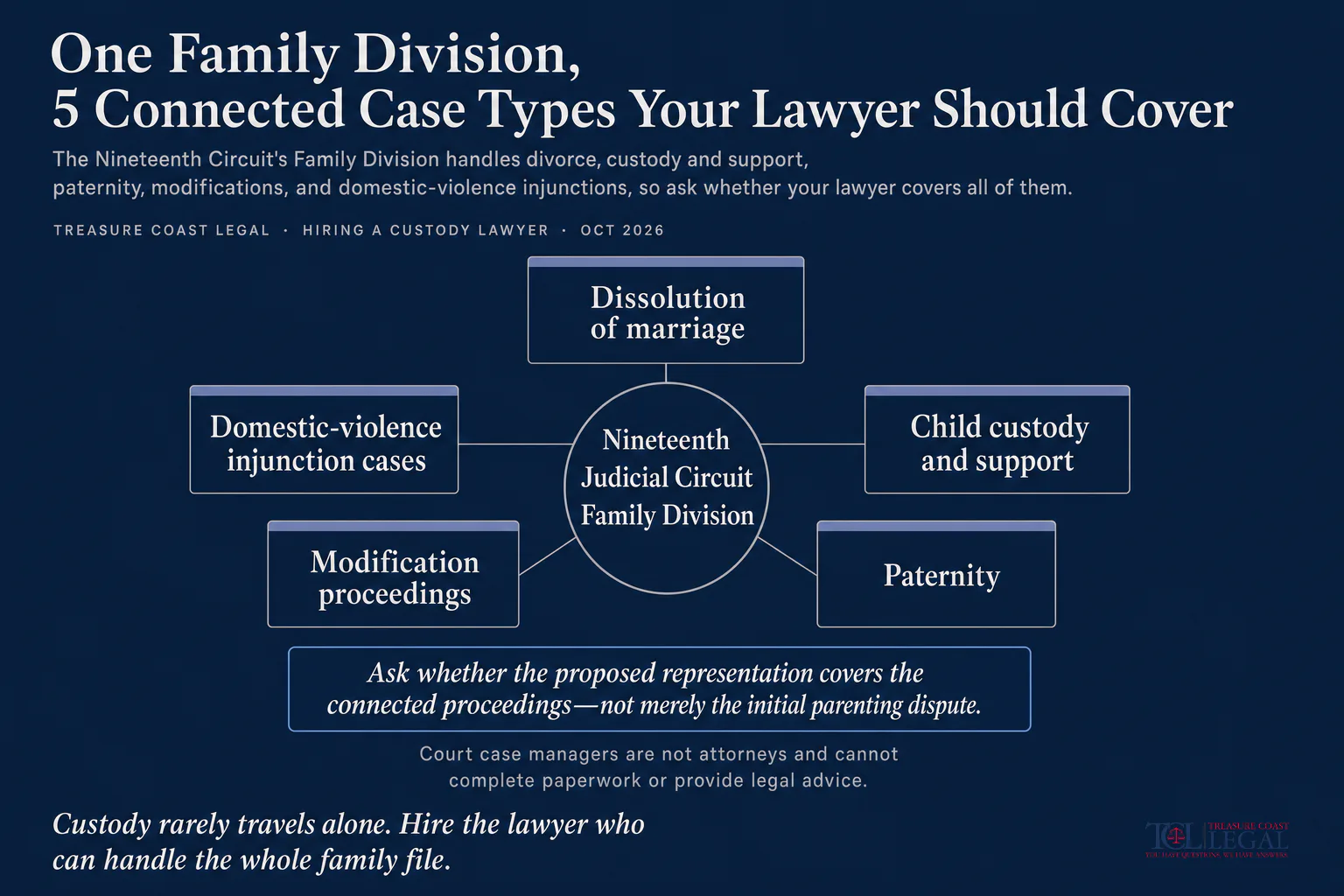
The Nineteenth Judicial Circuit's Family Division says case managers are not attorneys and cannot do paperwork or give legal advice. Under section 61.183, courts may refer contested issues to mediation. If parents reach agreement, the mediator prepares a consent order for review by the parties and their attorneys, if any, once the parties approve it, the court reviews it and, if approved, enters it.
When Custody Overlaps With Divorce, Support, or Paternity
Married parents facing custody plus property division should see our Divorce page. For support, see our Child Support page or Spousal Support page. Unmarried parents may need paternity established first. Military families should read Florida's approach to military divorce, custody, and support. Our Family Law page covers the rest.
Why a Custody Lawyer in Florida Should Know the Nineteenth Judicial Circuit
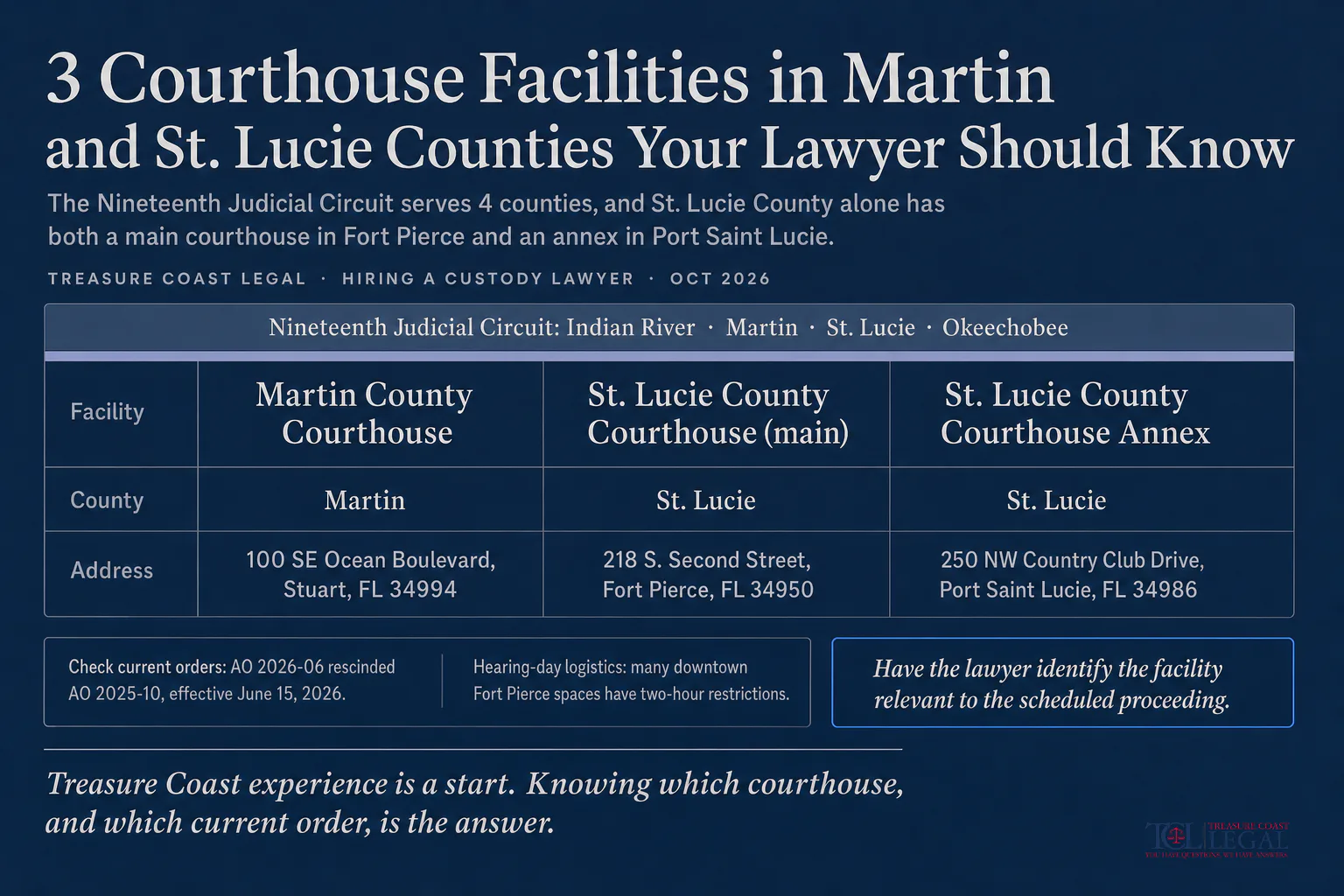
A custody lawyer in Florida who regularly practices in the Nineteenth Judicial Circuit knows where your case belongs and which local orders apply. The circuit's courthouse directory lists Indian River, Martin, St. Lucie, and Okeechobee counties. Test that familiarity rather than expecting special treatment.
Martin and St. Lucie County Cases Run Through the Same Circuit
Martin County's courthouse is at 100 SE Ocean Boulevard in Stuart. St. Lucie County's is at 218 S. Second Street in Fort Pierce, with an annex at 250 NW Country Club Drive in Port St. Lucie. Whether you hire a Stuart FL custody lawyer or a Port St. Lucie timesharing attorney, ask how often the lawyer appears in your county.
What Local Familiarity Means in Practice
In June 2026, Administrative Order 2026-06 rescinded an earlier order on artificial intelligence in filings, and the mediation page says family mediations are remote until further notice. Ask which current administrative orders govern your next step.
Why Office Location Still Matters
We work from 100 SW Albany Ave, Suite 310 in Stuart and from offices in Fort Pierce and Port St. Lucie, so reviewing evidence before a hearing need not mean a long drive. Stuart parents can read our guide to child custody in Stuart, FL, and Port St. Lucie families can visit our Port St. Lucie divorce attorney page.
How to Vet Custody Attorneys in Florida Before You Book a Consultation
Check Bar status first, then credentials and family law focus.
Check the Florida Bar Record First
Search The Florida Bar's Lawyer Directory for the specific attorney handling your case. Its discipline resources explain public records, but a directory check is only a screen. See our Florida family law attorney guide for Martin, St. Lucie, and Indian River counties before choosing a Florida family law attorney.
What Florida Bar Board Certified in Marital and Family Law Signals
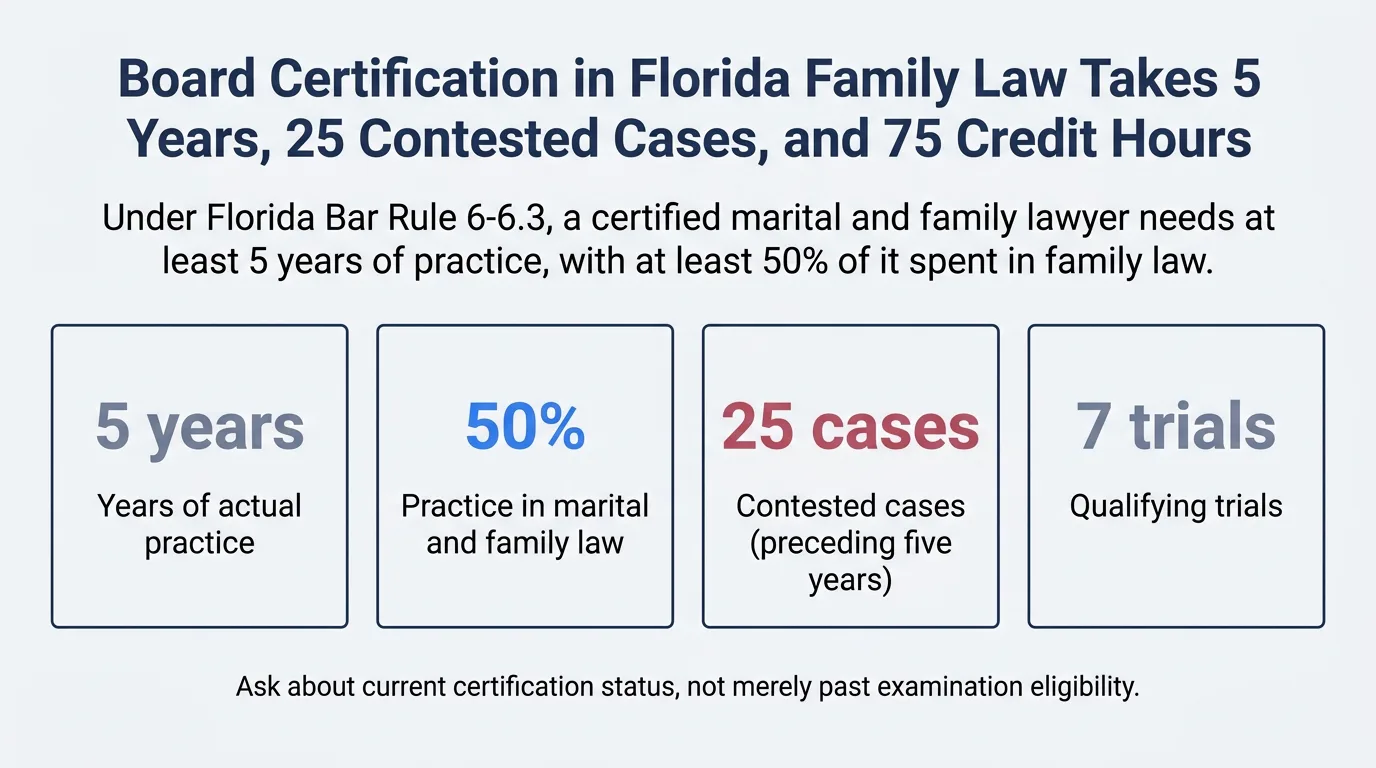
Rule 6-6.3 of The Florida Bar's certification rules requires five years of practice, at least 50% in marital and family law, and substantial involvement in 25 contested cases, including seven qualifying trials, in the last five years. Applicants also need 75 credit hours, a written exam, and peer references. Many capable Florida family law attorneys are uncertified.
Comparing Your Options Side by Side
No option always wins. Match help to conflict level.
| Option | What it is | Consider when |
|---|---|---|
| General practice attorney | Handles many practice areas | Your case is simple and fully agreed |
| Experienced family law attorney with local court time | Family focus in Martin or St. Lucie County | Time-sharing is contested or a hearing is near |
| Board-certified marital and family law attorney | Meets Bar certification standards | Relocation, high assets, or complex evidence |
| Self-representation | Filing with approved family law forms | Both parents agree on every term |
Questions to Ask a Custody Attorney in Florida at Your First Consultation
The Florida Bar's hiring guide recommends asking how often an attorney handles similar matters and how communication works. Also ask any custody attorney Florida parents are considering whether the first meeting is free.
Questions About Experience and Local Court Time
- How many similar cases have you handled in Martin or St. Lucie County?
- What work did you personally perform?
- Do comparable cases usually settle or go to trial?
- Have you handled relocation or shared parental responsibility disputes?
Questions About Strategy for Your Case
- What outcome is realistic, and what are the risks?
- What evidence should I preserve first?
- Should we request temporary orders?
- How will you prepare me for mediation?
Expect likely paths in your legal proceedings, not guarantees.
Questions About Communication and Cost
- Who on your team will I talk to?
- How fast do you return calls?
- What are the advance payment, hourly rate, and billing increment?
- Can the other parent be ordered to contribute to fees?
What to Bring to Your First Meeting With Florida Child Custody Lawyers
Florida child custody lawyers work best when you organize court, parenting, and financial records with a timeline, as The Florida Bar recommends.
Court Papers and Existing Orders
Bring the petition, proof of service, hearing notices, prior orders, parenting plans, and domestic violence injunctions. Rule 12.140 of the Florida Family Law Rules of Procedure makes a response due 20 days after service, with exceptions.
Records That Show Your Role as a Parent
- School records
- Medical records
- Extracurricular involvement
- A caregiving calendar
- Unedited messages and emails
Mention any planned move or extracurricular activities that affect the schedule. Under section 61.13001, relocation means a change of at least 50 miles from the principal residence for at least 60 consecutive days, excluding temporary vacation, education, or health care absences. Absent good cause, a temporary relocation motion must be heard within 30 days of filing.
Financial Documents for Support and Fee Questions
Bring pay stubs, tax returns, and childcare and insurance costs. Rule 12.285 of the Family Law Rules of Procedure can require three years of tax returns, three months of pay stubs and checking statements, and 12 months of savings, money market, and other account statements. Our Child Support page explains calculations.
What Custody Lawyers in Florida Charge and How Legal Fees Work
Fees depend on your agreement with custody lawyers in Florida and how contested the case becomes. Request separate settlement and trial estimates.
Retainers and Hourly Billing
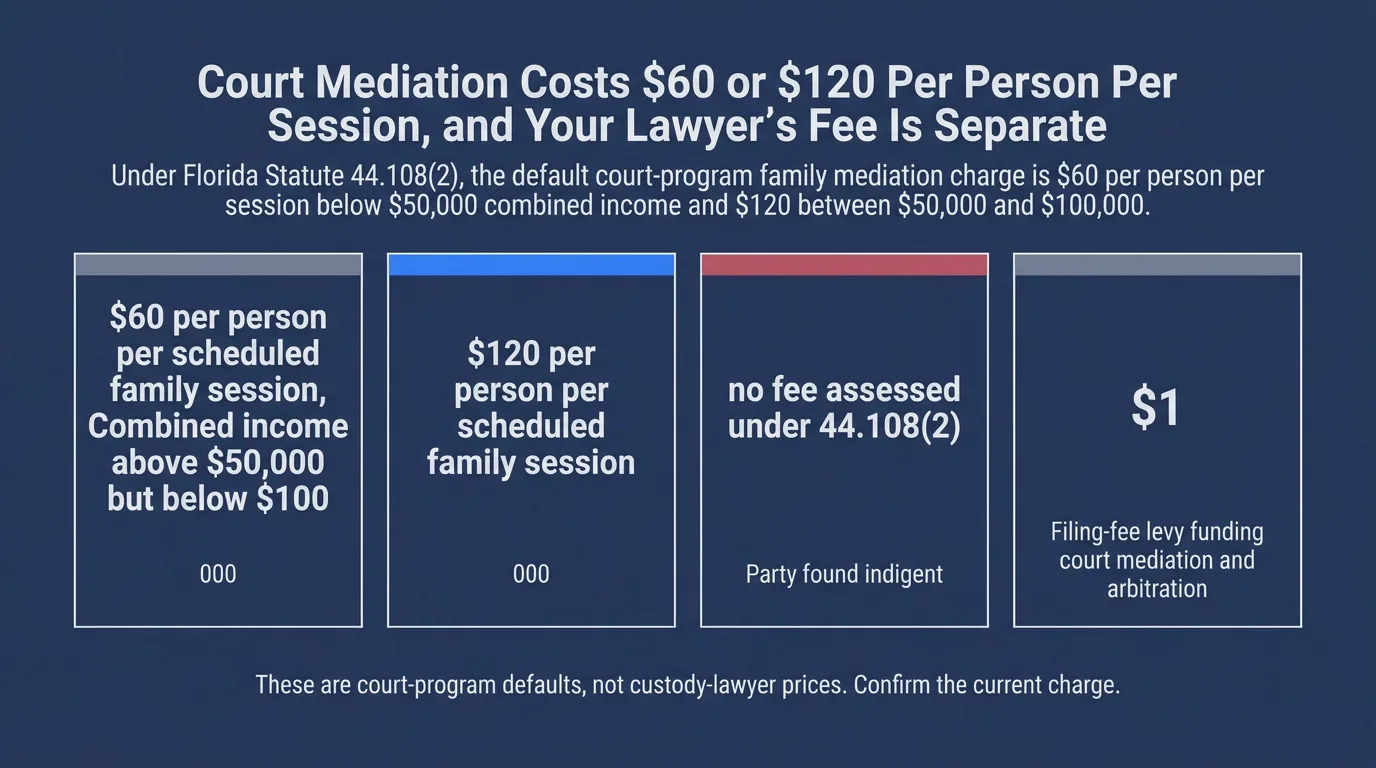
Rule 4-1.5 distinguishes an advance fee, billed as work happens, from a true retainer that only secures availability. Ask which you are paying. Under section 44.108, court mediation costs $60 per person per session below $50,000 combined income and $120 between $50,000 and $100,000. Indigent parties pay nothing.
Why Custody Cases Are Not Taken on Contingency
Rule 4-1.5(f)(3)(A) bars fees contingent on securing a divorce or on support or property awarded, except narrow post-judgment cases like collecting overdue child support.
When the Other Parent May Help Pay
Section 61.16 lets a court order a reasonable fee contribution based on both parties' financial resources, paid during the case and directly to the attorney. Raise any income gap at consultation so you understand your legal options.
Red Flags That Mean You Should Keep Looking
Walk away from guarantees, vague local answers, and broken communication, which also justify replacing a current lawyer.
Guarantees and Scorched-Earth Promises
Rule 4-7.13(b)(1) bars advertising that guarantees results, so walk away from any lawyer who guarantees a timesharing or parental responsibility result. Promising to "destroy" the other parent may inflate fees without helping your children.
Vague Answers About the Local Court
Avoid lawyers who cannot name your filing family court or restate sole or joint custody as Florida's shared parental responsibility and time-sharing.
Communication That Breaks Down
Rule 4-1.4 requires answering reasonable information requests promptly. Under Florida Rule of General Practice and Judicial Administration 2.505, appearing counsel usually needs court approval to withdraw. Report misconduct to the Bar's Attorney/Consumer Assistance Program at 866-352-0707.
Frequently Asked Questions About Custody Lawyers in Florida
Who wins most child custody cases in Florida?
Florida's Chapter 61 favors neither mothers nor fathers. Outcomes depend on the evidence and the children's needs.
What is the new law for child custody in Florida?
Since July 1, 2023, Chapter 2023-301, CS/HB 1301 presumes equal time-sharing is best. Per the Florida Senate's bill page, a parent can rebut it by a preponderance of evidence.
What is the biggest mistake parents make in a custody case?
Ignoring court orders is risky, since the other parent can ask the court to enforce them and Florida law provides enforcement remedies. Moving the children without approval also hurts your case.
How does fighting for custody work in Florida?
The legal process moves through filing, service, financial disclosure, and mediation, then trial if needed. Under section 61.183, courts may refer parenting disputes to mediation.
Do I need a lawyer if my co-parent and I agree on everything?
Not necessarily. Agreed parents can use Nineteenth Circuit approved forms but still need a court-approved order.
Can I file for divorce and custody online in Florida?
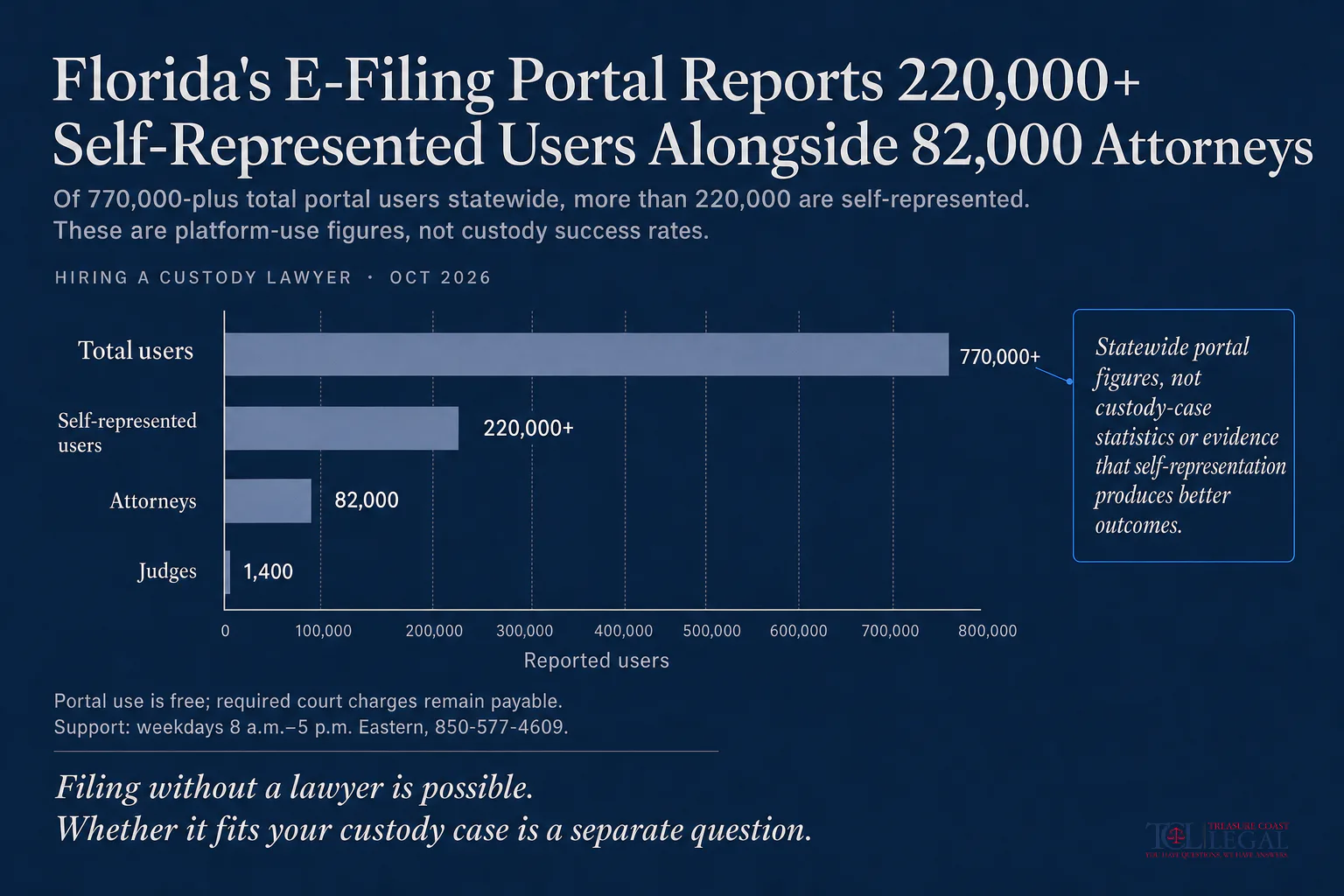
Yes. The Florida Courts E-Filing Portal accepts filings, and registration is free, though the E-Filing Authority charges per-filing convenience fees of $5 per filing by e-check or 3.5 percent by credit card, on top of court filing fees. Our guide to Florida divorce forms covers the paperwork.
Your Next Step Toward Protecting Your Time With Your Kids
Early temporary orders, signatures, and posts can follow you to a final hearing. Our attorneys handle custody, time-sharing, and other family law issues from Stuart, Fort Pierce, and Port St. Lucie, because around here, local matters. Call 772-238-7755 or schedule your consultation. Consultations are paid.
Your Treasure Coast Neighbors, Shaun Plymale, Florida Attorney and Managing Partner
The information provided in this blog is for general informational and educational purposes only and is not intended as legal advice. Laws and legal outcomes vary based on specific facts and circumstances, and the information contained herein may not reflect the most current legal developments. You should not act or refrain from acting based on any information in this blog without first seeking legal advice from a qualified attorney licensed in your jurisdiction. This blog may be produced, in whole or in part, with the assistance of generative artificial intelligence tools and is reviewed by legal professionals before publication; however, no representations are made as to its accuracy, completeness, or applicability to any specific situation. Reading or interacting with this blog does not create an attorney-client relationship between you and the firm. An attorney-client relationship is formed only through a written agreement signed by both you and the firm. This blog may be considered attorney advertising under applicable laws and ethical rules. Prior results do not guarantee a similar outcome. The firm disclaims all liability for actions taken or not taken based on the content of this blog.
Shaun Plymale Founding Attorney Treasure Coast Legal